Let’s give Indigenous Foremothers due consideration and respect for their contribution to the peaceful economic development and settlement of Canada. Through marital union in their ‘manner of the land’ they made a significant contribution to the economic development and settlement of Canada. Let’s give these women the recognition they deserve.
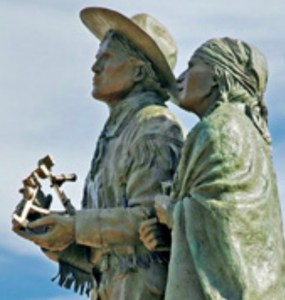
History is subject to period sensibility. What was thought acceptable, today would be deemed exploitive. Yet, is it fair to occlude the immense contribution of indigenous women from Canadian History? Humanity is not easily categorized into right and wrong behaviors. Understanding what occurred, is not agreeing with what occurred.
New France
Early in the French Canadian colonization, Catholic clergy of New France/Lower Canada frowned upon marriages with First Nations women. In response, provision of ‘Kings Daughters’, 800 French women ‘of good character’, was sponsored by King Louis XIV between 1663 and 1673. The intention of this immigration was to correct the woeful imbalance of ‘available’ women with European fur traders, settlers and French soldiers.
Fortunately, arrival of these ‘Kings Daughters’ did not dissuade ‘country marriages’ from continuing with local women. Indigenous marriages strengthened Quebec’s genetic pool of a small number of colonists of the Canadian St. Lawrence Valley. Present day genetic analysis/sampling of Quebec’s population, that identifies as ‘non-indigenous’, indicates at least one Native ancestor 6 to 7 generations ago(3). This indigenous admixture prevented genetic susceptibilities of the small isolated population resulting in few genetic ‘Founder Effect’ diseases observed. Between 53% to 78% of Quebecois have at least one indigenous member in their genealogy.
Hudson Bay
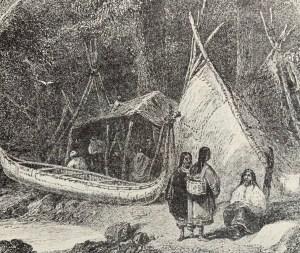
In 1660, the Hudson Bay Company (HBC) held a virtual fur trade monopoly over the Hudson Bay. Approximately 80% of company employees were recruited from remote northern Orkney Islands of Scotland. These men were considered best to cope with the northern Canadian maritime environment. This offer of escape from poverty came in exchange for a 5-year indenture, with wives and families prohibited from accompanying them(1). HBC officers were allowed accompanying families, but few wives were willing to trade England’s comforts for a lonely northern trading post. HBC indentured employees (servants) were forbidden from relationships with local indigenous women who were also banned from trading posts to limit interaction.
As HBC expanded inland in pursuit of trade, competition with the Montreal-based North West Company (NWC) escalated. All ranks of the NWC had already embraced the practice of extensive intermarriage ‘in the manner of the country’ with their indigenous trading partners(2).
To maintain economic advantage over the NWC, HBC servants were required to press further inland for trade. HBC, by end of the 1700’s, had accepted the necessity of indigenous female for this to be successful. HBC servants lacked essential knowledge and skills to survive harsh, remote, lonely outposts. Trade loyalty had to be developed and maintained with their indigenous trading partners.
European men were neither experienced nor trained to survive in the harsh, unfamiliar Canadian northern climate. Neither was the fur trade industry. Trade relied on goodwill with the indigenous population. The solution of marital union was obvious. An indigenous wife would provide companionship, essential domestic skills for food and clothing, translation, in addition to securing a trade advantage through family kinship. She could also serve as diplomat, cultural advisor, interpreter, and provide the vital knowledge and labour needed in preserving furs for export to Europe. Any relations with native women had to be viewed as beneficial to both parties.
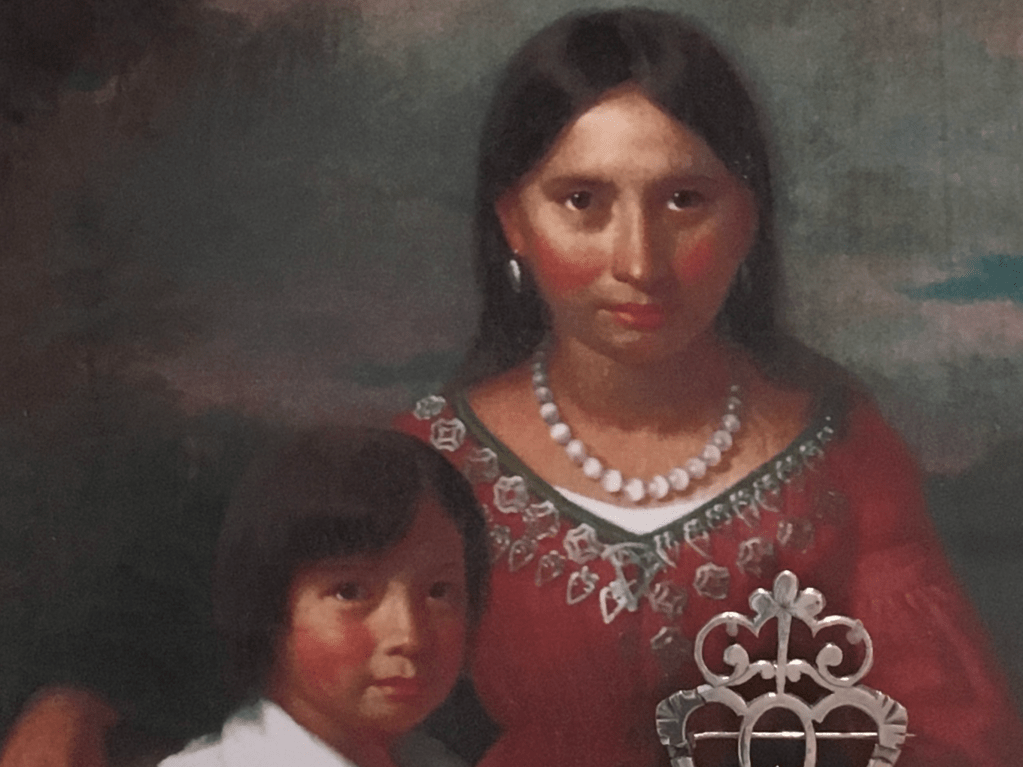
With this understanding, HBC began to actively encourage marital union ‘in the manner of the country’ between employees and Indigenous women of their trade areas. This ‘Country Marriage’ was taken seriously, even officiated by the overseeing HBC official, and was ‘consecrated’ with an agreed bride price paid to her family following local custom.
Both parties benefited. The husband gained a spouse integrating him into the society with which he traded. The woman gained status and economic benefit: their offspring and her extended family received employment and loyalty of the HBC. That a man had wife and family back in Orkney was of little concern. In the ‘manner of the country’ a man could have more than one wife if he could support both. Indigenous practicality also did not view marriage as permanent. It was understood that both parties could leave if dissatisfied or the union was no longer of benefit.
Explorers
One of the most famous of ‘country wives’ is Sacagawea, the younger of two country Shoshone wives of French Canadian fur trapper Toussaint Charbonneau. She served as translator and diplomat on the Lewis and Clark Expedition (1804-1806). President Thomas Jefferson commissioned this expedition to explore and map newly acquired territory from the Mississippi River to the Pacific Ocean, in order to claim the western half of the United States.
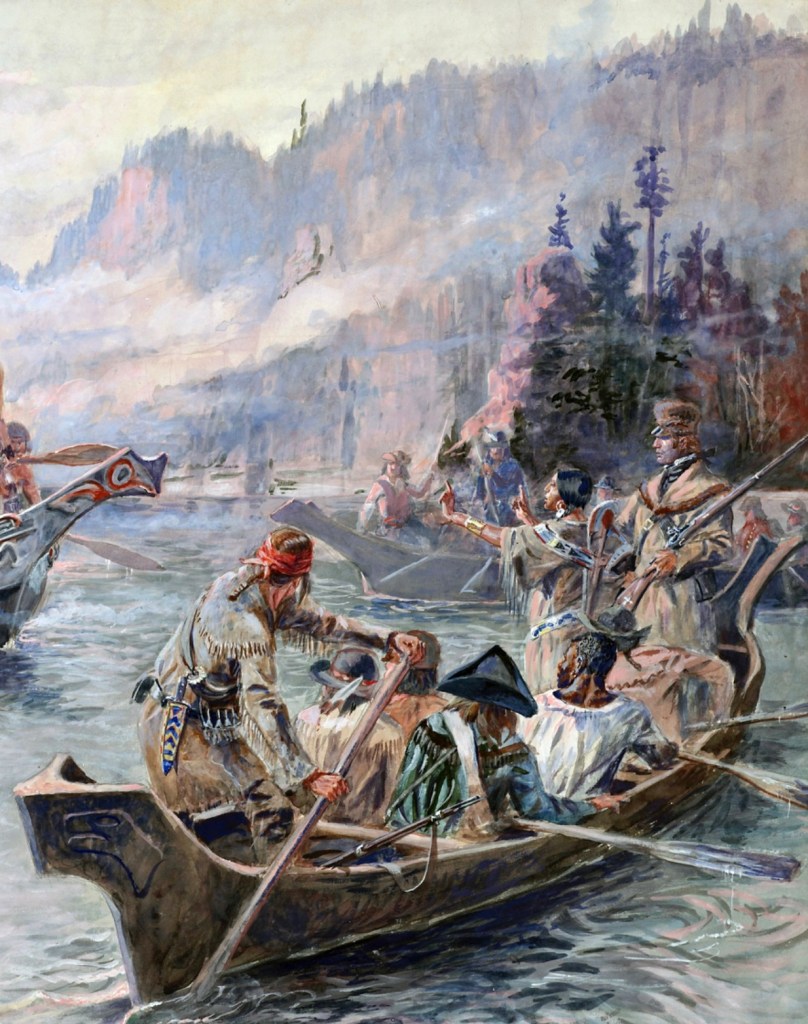
Meriwether Lewis called the ill-reputed Charbonneau ‘a man of no particular merit’ yet was forced to hire him to acquire the services of Sacagawea. William Clark, expedition leader, reprimanded Charbonneau for beating Sacagawea. Charbonneau was paid, his wife was not though she proved a significant asset for feeding and clothing the expedition, as well as serving as a diplomat and translator(4). Today, this indigenous woman has acquired almost mythological status.
Yet she died, 6 years after the expedition, abandoned by Charbonneau, and William Clark adopted her children
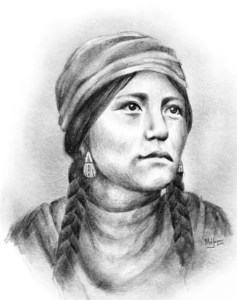
Charlotte Small, wife of explorer and cartologist, David Thompson also served as translator (Cree, French, English) and diplomat. At age 29 Thompson married this 13-year-old Metis Cree girl ‘in the manner of the country’. She was the product of a ‘country marriage’, in which her father abandoned her family to return to Scotland. Accompanying Thompson, Charlotte’s first child was born at age 15 and 12 others followed.
Thirteen years after their common law ‘country’ union, the marriage was formalized at a Scotch Presbyterian Church in Montreal. Their marriage is recognized as the longest pre-confederation marriage, lasting 57 years, including those years ‘in the manner of the country’.
James McMillan, who travelled with David Thompson, took Josephte Belisle, as a ‘country wife’ in 1806 and had 2 children with her. He went on to have 2 more ‘country wives’, Marie Letendre and Kilakatah, and numerous children. Obeying indigenous customs, before he returned to Scotland to marry a Scottish bride, he married his ‘country wives’ to responsible partners and ensured his sons were offered opportunities in the fur trade. Josephte Belisle married Amable Faforddit Delorme and had 5 more children. Widowed in 1835, she applied for and received compensation from NWC as Josephte McMillan.
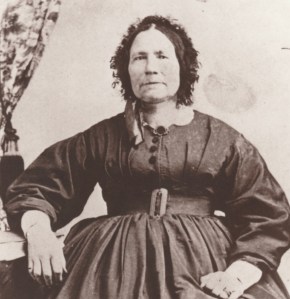
Both HBC and NWC honored their commitment to care for these ‘country marriages’ and provided opportunity for their offspring. Mary Sinclair Inkster (1804-1892), born of a ‘country’ union between a Cree woman, Nahoway, married William Sinclair (1794-1868), resourceful Chief Factor of HBC Winnipeg District. William Sinclair was also an offspring of a ‘country marriage’ between an Orkney fur trader and a Cree woman.
Legality of Indigenous Marriage recognized
‘Country marriage’ was considered a valid union under the concept of common law marriage. The offspring of such unions had recognized and legal rights. An intriguing case of ‘country marriage’ involves the union of Magdeleine Poitras, ‘country wife’ of John Macdonell, known as ‘Le Prêtre’ because of his devout Catholicism. Sometime before 1797 he took her as his wife at the age of 12. ‘Under my protection’ he claimed, their marriage resulted in 6 children. In 1813 he drew up a marriage contract, just before purchasing land, and built a large house for his family on the Ottawa River.
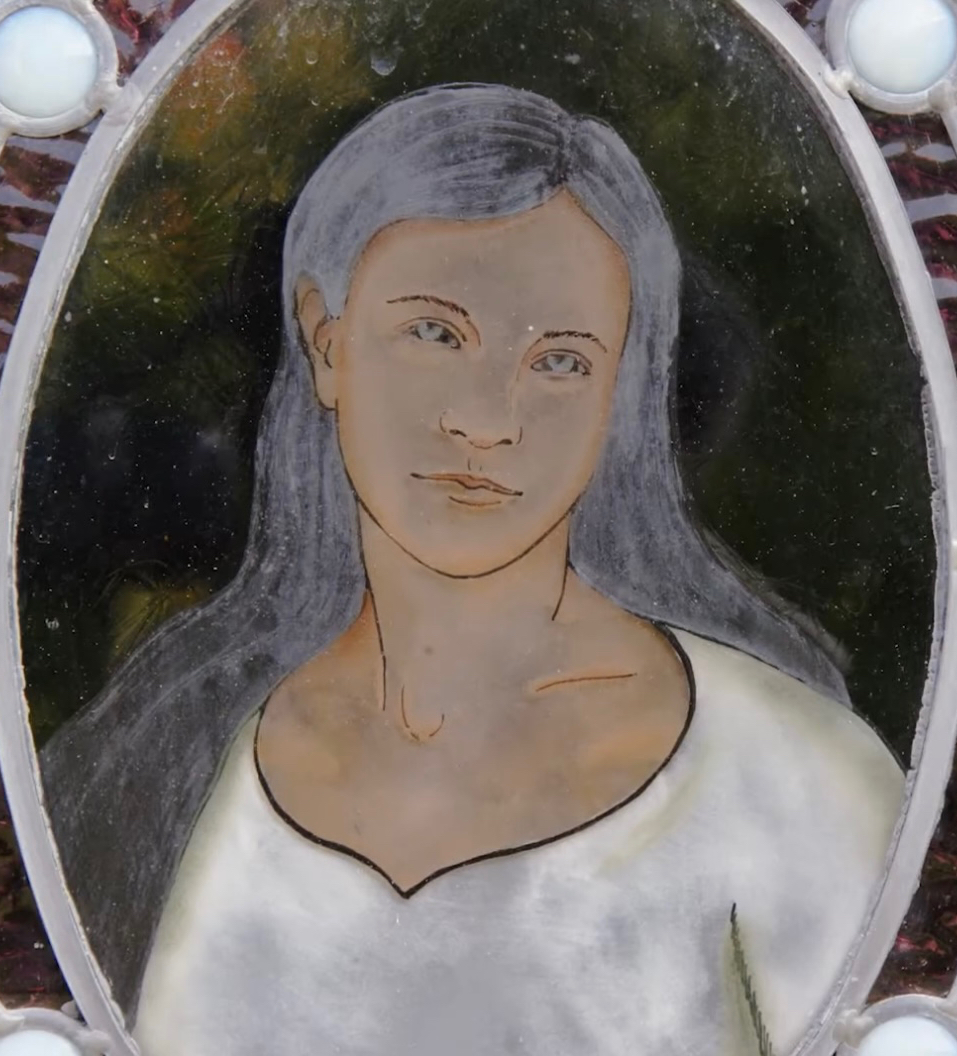
The marriage was never solemnized, after the contract. His will divided his property equally between their children, providing an annuity to Magdeleine. Three years after his death, in 1850, Magdeleine underwent a post-humorous marriage ensuring their union and inheritance was recognized and upheld(6).
William Connolly, an Anglo trapper of the NWC married, ‘according to local custom’, a Metis Cree woman, Miyo Nipiy (also known as Susanna Pas de Nom), when stationed at Manitoba. Together they had 6 children and in 1832 he took the family back to Montreal. Disavowing their ‘country marriage’, he instead married Julia Woolrich in a Catholic ceremony. His Metis family returned to Manitoba where Susanna retreated to a Grey Nuns convent. When he died in 1848, his eldest Metis son sued the estate arguing that he and his siblings were legitimate heirs and his argument was upheld by the Supreme Court of Upper Canada. Appeal to the Privy Council of the United Kingdom resulted in Julia Woolrich settling out of court(5). This judgement validated the concept of ‘First Nations Country Marriage’ underpinning Canadian common law.
William Connolly’s daughter, Amelia, fared better than Suzanna. In 1828, at age 15, he officiated her ‘country marriage’ to James Douglas, a mixed-race trapper of Scottish and African descent(7). Douglas was an illegitimate son of a Barbadian planter merchant and a free coloured woman. Amelia spoke Metis French, Cree and very little English and bore him 13 children, 6 of whom survived to adulthood. Their country union was solemnized in 1836 to appease growing disapproval among European wives of fur trade officials. A feuding feisty man, Douglas rose in the ranks of NWC and later transferred to HBC. He was appointed Governor of the Colony of Vancouver Island (1851) and, in 1858, Governor of the Crown Colony of British Columbia. Amelia Douglas provided calming intervention in his tumultuous relations with local indigenous people. In 1864 James Douglas was knighted by Queen Victoria and Amelia was titled Lady Douglas.
Many notable European men, ill-equipped for life in Canada’s wilderness, took ‘country wives’ who enabled their distinguished contributions. Yet few of these women are recognised in history(8).
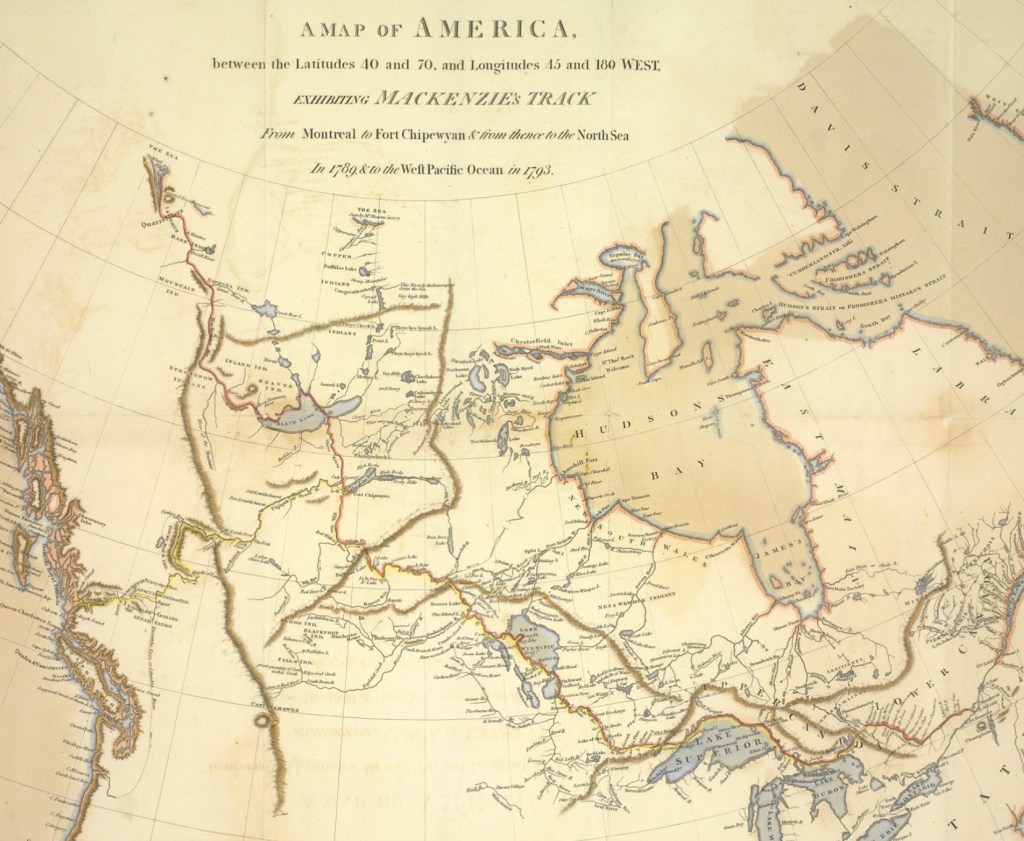
Alexander Mackenzie, Scottish explorer and fur trader, accomplished the first land crossing of North America in 1793. Enroute to Fort Chipewan, he made a ‘country marriage’ with Catt. Little is known of this woman, but a son came from this union, Andrew, who entered the fur trade and became a NWC clerk. At age 48 Mackenzie returned to Scotland to marry a 14-yer-old heiress.
Simon Fraser, fur trader and explorer, who charted much of British Columbia, had more than one country wife, for in 1807, he recorded, “Once more entered into the matrimonial state”. At age 44 he returned to Cornwall to marry Catherine McDonell in 1820.
George Simpson, Governor in Chief of HBC, fathered 11 children with 7 women, between 1821 and 1860. One of his former wives, Margarite Taylor, he belatedly married off, in a solemnized ceremony, to Amable Hogue, one of his paddlers of the HBC who later became his mason(9)(10).
Fur Traders in their own Right
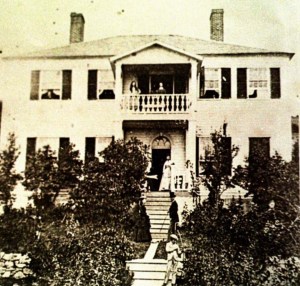
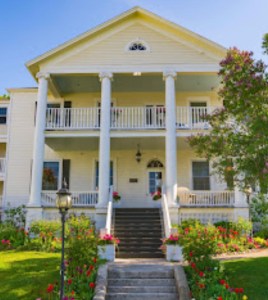
Some ‘country wives’ became fur traders. Magdelaine La Fromboise (1781-1846), of mixed Odawa and French descent, began managing her husband’s business after his murder in 1806. She expanded the business and funded a school and missionary work on the Mackinac Island. Although, technically located in present day Michigan, her father was chief agent for the NWC and she viewed Montreal as her base of operation.
In conclusion:
By the 1830’s, Canada’s settlement made immigration more hospitable for European women. European men abandoned Native wives for ‘preferred’ European women. The growing missionary presence condemned marriage by ‘Indian rules’ and the condition of indigenous women living with European men deteriorated. Country marriages that were once considered an integral part of Canadian settlement, suddenly became shameful. These women disappeared from Canadian history, becoming a mere footnote.
Exploration, economic development and peaceful settlement of Canada was accomplished by men, with an indigenous wife at their side bridging cultural, linguistic and climatic challenges. These indigenous women are due historical consideration and respect. Without them, our Canada would be vastly different. Without them, perhaps, under the Doctrine of Discover (1823) Canada might not exist.
References:
- Manitoba History: ‘Covenant Servants’: Contract, Negotiation and Accommodation in Hudson Bay 1670-1782, Scott Stephen, Manitoba Historical Society, N. 60, February 2009
- Women of the Fur Trade, and marriage ‘a la façons du pays’, April, 2019. La Compagnie (hsp-mn.org)
- Native American Admixture in the Quebec Founder Population, C.Moreau, J-F Lefebvre, M.Jomphe, C.Bherer, A. Ruiz-Linares, H. Vezina, M-H. Roy-Gagnon, and D.Labuda. National Library of Medicine, 2013 June 12 (10.1371/journal.pone0065507)
- Sacagawea, Native American explorer, J.H.Buckley, Britannica (brittannica.com)
- William Connolly (fur trader), Wikipedia
- John McDonell, Dictionary of Canadian Biography by Herbert J. Mays
- James Douglas, Father of British Columbia, Dorthy Blakey Smith, 1971, Oxford University Press
- The Role of Native Women in the Fur Trade Society of Western Canada (1670-1830), S.Van Kirk, Frontiers: A Journal of Women Studies, V.7, No.3
- As Canadian as Can Be, (hoguegiradin.wordpress.com)
10. Women in the Shadows (1991), the story of Margaret Taylor(www.nfb.ca )
 Catherine Grove