In 1814, nineteen Loyalists of the Upper Canadian colony faced a charge of high treason against the Crown. Suspicions of their conspiracy and collusion with the United States had been raised during the British/American War of 1812. Eight of those charged were found guilty; and sentenced to being hung, drawn and quartered. This barbaric execution, (the condemned hung near death, cut down with intestines removed and burned, and body dismembered) was intended to serve example to colonists, mostly ‘late Loyalists’, that loyalty to the Crown was to be unquestionable.
The quickly assembled court, called an assize, was presided by three Loyalist judges, all of whom served, at some time, as Chief Justice for Upper Canada, and were from the prominent ruling families of the colony. They were also life-appointed members of the Executive Council which had governed the elected Legislative Assembly of the colony since 1790. The prosecutor was John Beverly Robinson, 23 years of age, also from these same prominent Loyalist families. (1)
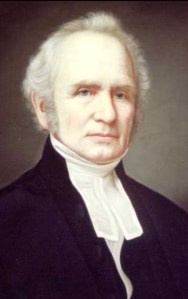
Two waves of Loyalist American immigration occurred, post-American Revolution War, from 1777 to 83. (2) The first wave, from 1777 to 83, came in response to severe persecution in the new republic for their loyalty to the Crown. Post-1780 migrants were known as ‘Late Loyalists’ who, mostly, came to gain land. All that was required of these latter loyalists was allegiance sworn to the Crown. The British government hoped to encourage settlement of the colony through generous land grants to offset the large French colony of Lower Canada. After 7 years residence, male Loyalists were given the right to vote for, and even run for membership of the Legislative Assembly.
With American invasion of Upper Canada, in the summer of 1813, loyalty of this latter group became suspect. Any hint of republican sentiment, regarding human rights, introduced suspicion of disloyalty to the Tory Executive Council.
In 1813, during the war with the Americans, extended powers were given to the military. This was the ‘last straw’ to Joseph Willcocks(3), an Irish-born, 5-session elected representative of the Legislative Assembly for Lincoln-Haldimand, Niagara. As assumed opposition leader, Willcocks diligently worked to encourage loyalty of six Haudenosaunee nations to the Crown, broaden availability of schooling and fought to combate the hierarchical Tory nepotism of the Executive Council.
By 1813, far-reaching nepotism of the early Loyalists had come to be known as the Family Compact because of their extensive compacted web of blood, marriage, legislation and business.(4) Large estates and wealth acquisition could not be separated from their political and judicial power. Theirs ties to the Church of England ensured that 1/7th of all surveyed Crown land was held back as clerical reserve for this church.
Dominating through the Executive Council and social connection, the Family Compact influenced lawsuits, and land grants. In October 1806, reopening of the United Empire List, had effectively limited land acquisition to British subjects. Subsequently, they introduced a list of resident aliens, where suspect aliens could be deported by order of any magistrate, if perceived as a threat to security.
Manifest injustice (a legal outcome that is plainly and obviously unjust) was rampant for accuser and judge had potentially become one and the same. Property seized by the sheriff for any manner of crime, from debt to treason, was offered in ‘collusion sale’ to a select group of bidders at below market value.
The American occupation of 1813 presented opportunity to redress this misuse of justice. In the summer of 1813, Willcocks assembled a company of Canadian Volunteers and defected to the United States. Commissioned as a major in the United States Army, his volunteers were involved in a number of skirmishes, foragers and scouts around Niagara. With the capture of Newark (present day Niagara-on-the-Lake) he was appointed police over the occupied town.
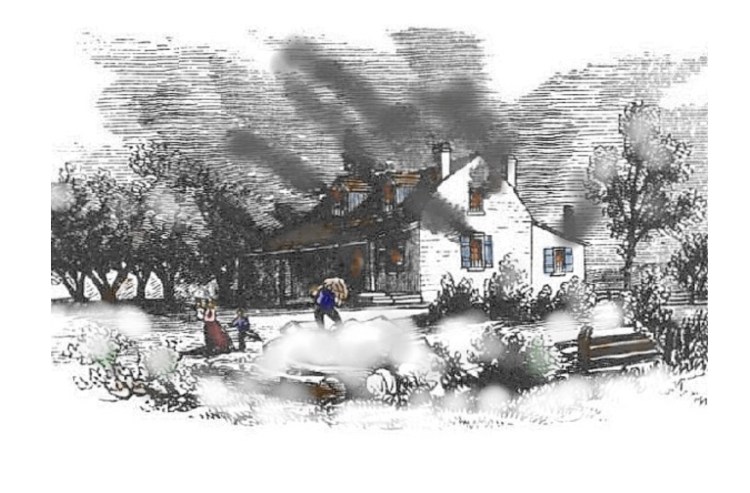
In retaliation for one of his volunteers being killed, Willcocks ordered the burning of Newark on December 9, 1813. Four hundred residents (mostly women and children) were left with only the clothes on their back. Their possession and provisions were destroyed before their eyes, leaving them without shelter in the height of winter. Many froze to death; many others starved. His commanding officer, American Brigadier General McClure (5) was promptly relieved of command and dismissed from the US Army in discipline for the act.
Joseph Willcocks, former member of the Legislative Assembly, was found guilty of high treason, in absentia, at the Assize of Ancaster in 1814. On September 4, of that same year, he died from a mortal wound during action at Fort Erie. The man who burned the town of Newark, is buried in Buffalo’s historic Forest Lawn Cemetery, a burial place of notable American heroes.
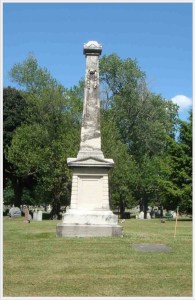
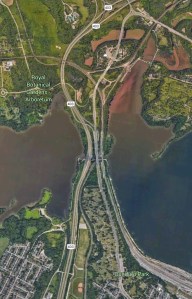
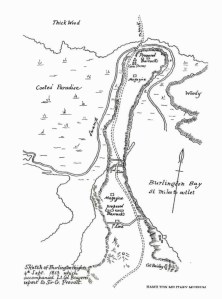
As for the ‘traitors’ of the Ancaster Assize, the death sentence of the 8 was mercifully changed to hanging, followed by decapitation. The execution was carried out July 20, 1814 at the Burlington Heights Barracks. The bodies were thrown into an unmarked grave, close to the gallows, likely in present day Dundurn Park, overlooking Hamilton Harbour. Their heads were placed on pikes and paraded through local villages, as deterrent to future republican sentiment.
One of the imprisoned ‘traitors’, Jacob Overholser, died of typhus in the Kingston prison. He was a simple farmer, illiterate and father of 4. Charged with carrying arms and assisting the enemy, he had actually sought redress from the Americans, while their captive, for setting fire to his buildings and stealing his horses. The only witness to his alibi refused to testify under oath for religious reasons. Furthermore, doubt arose as to his guilt for his accuser was involved in a property dispute with him at the time of the charge. Neighbours raised the money to buy back the seized farm, at the sheriff’s sale, for his surviving family.(6)
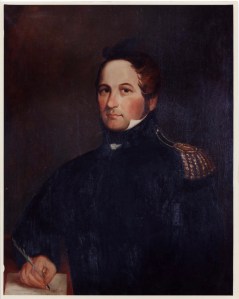
Another notable property seizure was the land of Epaphras Lord Phelps. This white secretary and power of attorney for Joseph Brant, Mohawk leader of the Six Nations, was a known American sympathizer. He fled to the United States in response to the charge of high treason, with the assistance of the Mohawks and his land was seized. A protracted legal battle resulted, since the land had been a gift, from Joseph Brant, to honour his marriage with a Mohawk lady, Esther Hill.(7)(8)
The Crown first argued against Esther’s claims, citing she was an ‘alien’, under terms introduced by the Executive Council, unable to hold property. When this was defeated, the Crown argued that the land had only been conveyed to her husband. Under the ‘couverture’ condition of British common law, she was considered chattel, as a wife, and unable to hold property. The Six Nations exerted influence, and the court was forced to cede the land back to her family. Within matriarchal Haudenosaunee society, property passed through the female family line.
Many grievances, caused by the powerful Family Compact influence, persisted until the Mackenzie Rebellion of 1837. Over 800 people were arrested, in this rebellion, with 92 transported to a Tasmanian penal colony, and 12 men hung.
This resulted in Lord Durham’s investigation of these grievances. In conclusion he condemned the Family Compact as “a petty corrupt insolent Tory clique” and put forth recommendations for government reform towards “responsible government” (self-government). The traitors of 1837 were pardoned (those still alive). The leader of the rebellion, William Lyon Mackenzie, was also pardoned and returned to his political career.
Within 30 years, Canadian democracy advanced to form a nation. Lord Durham’s recommendations came too late for those seekers of justice, now lying in an unmarked grave, somewhere in Burlington Heights.
- The Ancaster “Bloody Assize” of 1814, William Renwick Riddell, Ontario History Society, Special Issue: The War if 1812, Vol. 104, No. 1, Spring 2023
- https://www.thecanadianenclyopedia.ca/en/article/loyalists
- http://www.biographi.ca/en/bio/willcocks_joseph_%E.html
- https://en.wikipedia.org/wiki/Family_Compact
- https://www.warof1812.ca/burningofnewark.htm
- http://www.biographi.ca/en/bio/overholser_jacob_5F.html
- https://theheartofontario.com/wp-content/uploads/2018/02/Traiters-and-Treason-in-the-War-of-1812-1.pdf
- The Work of our Hands, Mount Pleasant, Ontario 1799-1899. A History, Dr.Sharon Jaegar, Heritage Mount Pleasant @2004
- https://en.wikipedia.org/wiki/Upper_Canada_Rebellion

