Undocumented history alleges beautician Elizabeth Arden handed out thousands of bold red lipstick tubes to New York suffrage marchers as they passed her Fifth Avenue salon in 1912.
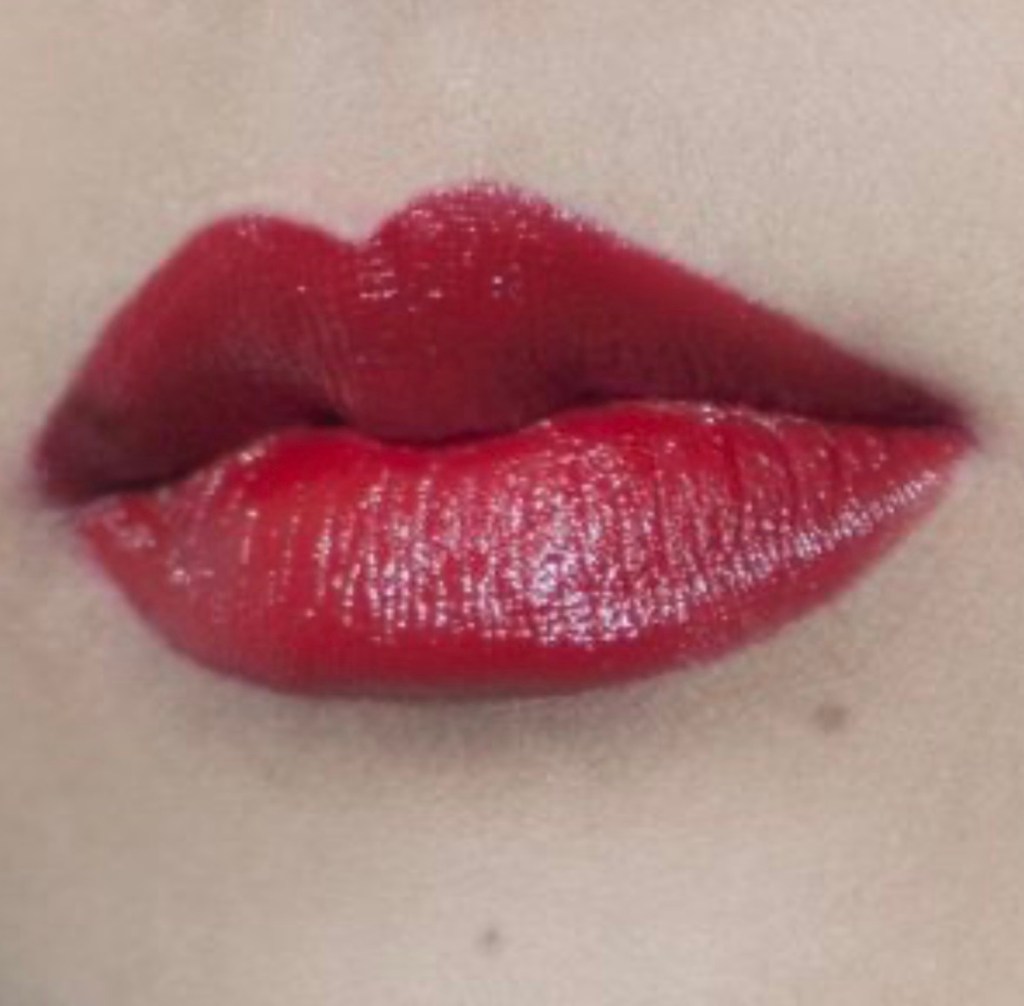
Photographs of both the May and November suffrage parades show no evidence of ‘painted lips’ on these protestors demanding their right to vote. Arden, herself a suffragette, shrewdly linked her cosmetic products with female suffrage and empowerment (1).
Prior to WWI, red lipstick and cosmetics were viewed as the domain of theatrical actresses, prostitutes and women of low morals. Yet, as the call for suffrage intensified, rallies in Europe, Australia and New Zealand reported an increased appearance of provocative red lips shouting slogans. Red lipstick had become a symbol of civil disobedience (2).
During WWI (July 28, 1914 to November 11, 1918) women were called to stand-in for fighting men in factories and hospitals as well as replacing them in such work as tram drivers, delivery staff and postmen.
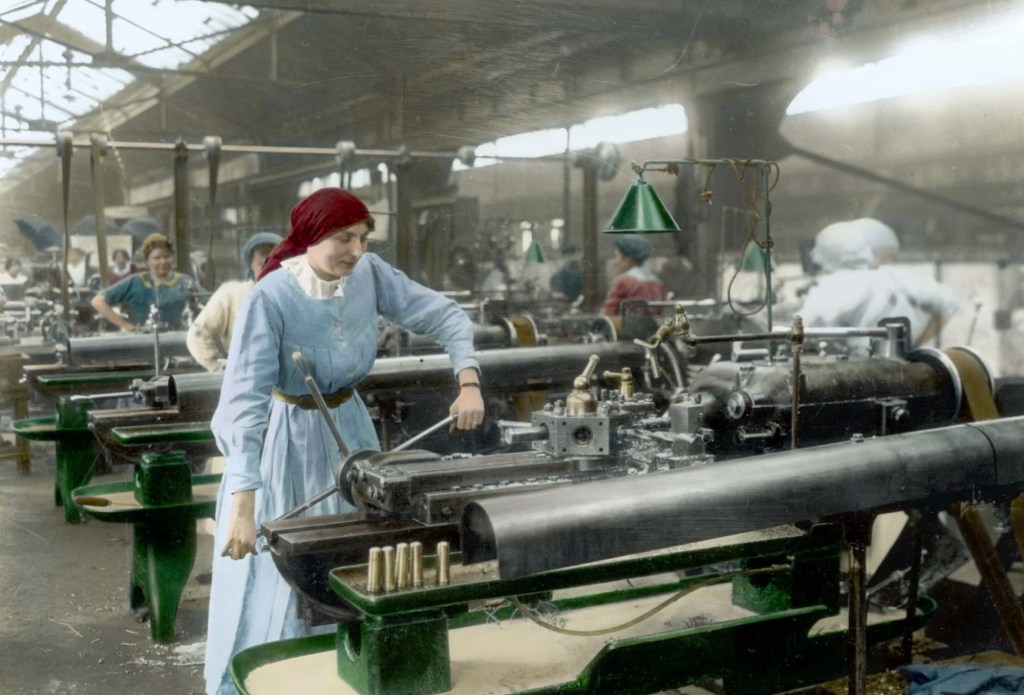
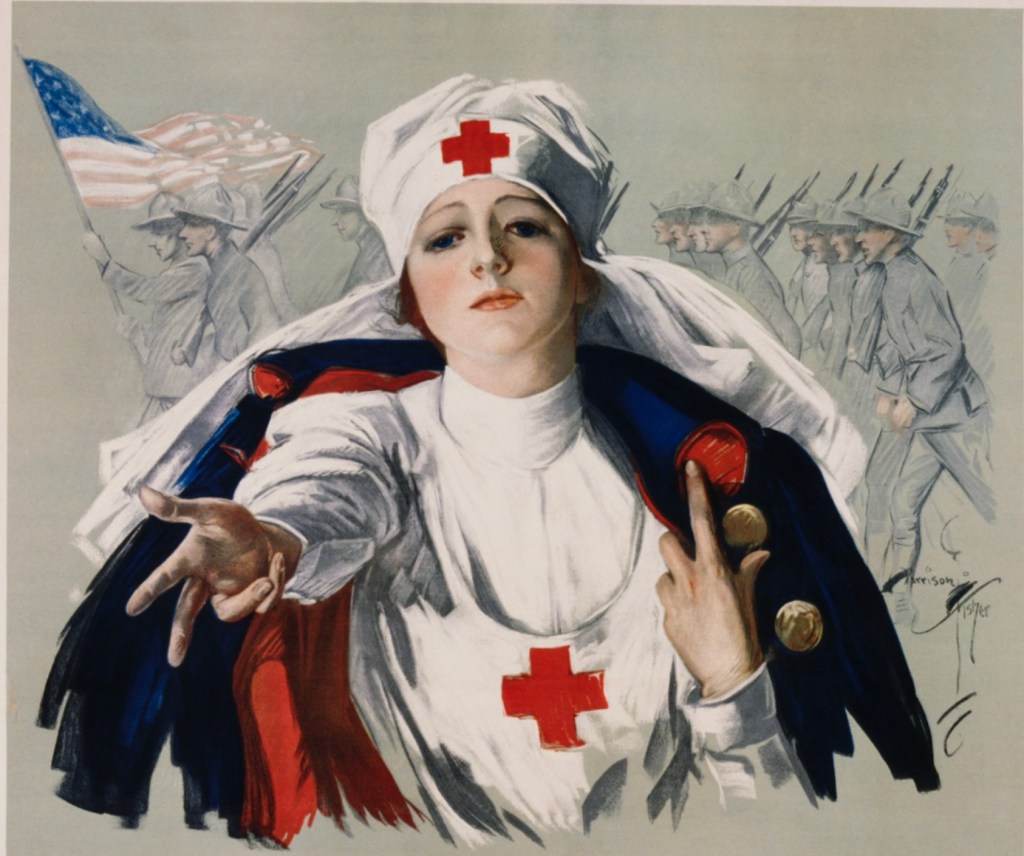
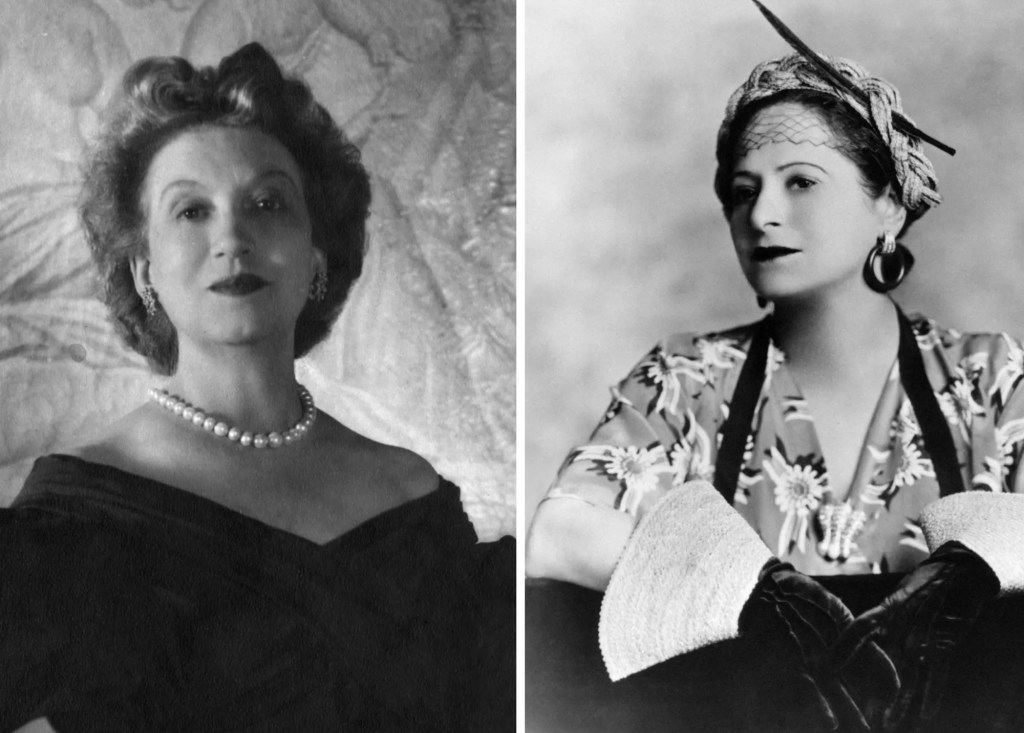
Lipstick was encouraged to emphasize a ‘duty to remain a woman’ while undertaking these male endeavours. Care of appearance was viewed as patriotic, and promoted by both Elizabeth Arden and her competitor, Helena Rubinstein, another cosmetic tycoon of the time.
Women’s contribution to the war effort resulted in major Western Powers granting women the right to vote during and after the war. Suffrage was granted in Canada (1917), Germany (1918), the United Kingdom (1918 for property-owning women over the age of 30 and in 1928 for all women) the Netherlands (1919) and the United States (1920).
Society did not return to pre-war conditions. An unsuccessful campaign against cosmetics, particularly against red lipstick, failed.
The increasing popularity of a movie industry and glamorous Silver Screen actresses influenced society’s acceptance and even coined a new word, ‘makeup’ to replace the term, ‘cosmetics’(3). Bold red lipstick, along with mascara and blush, had become affordable and readily available at department store beauty counters.
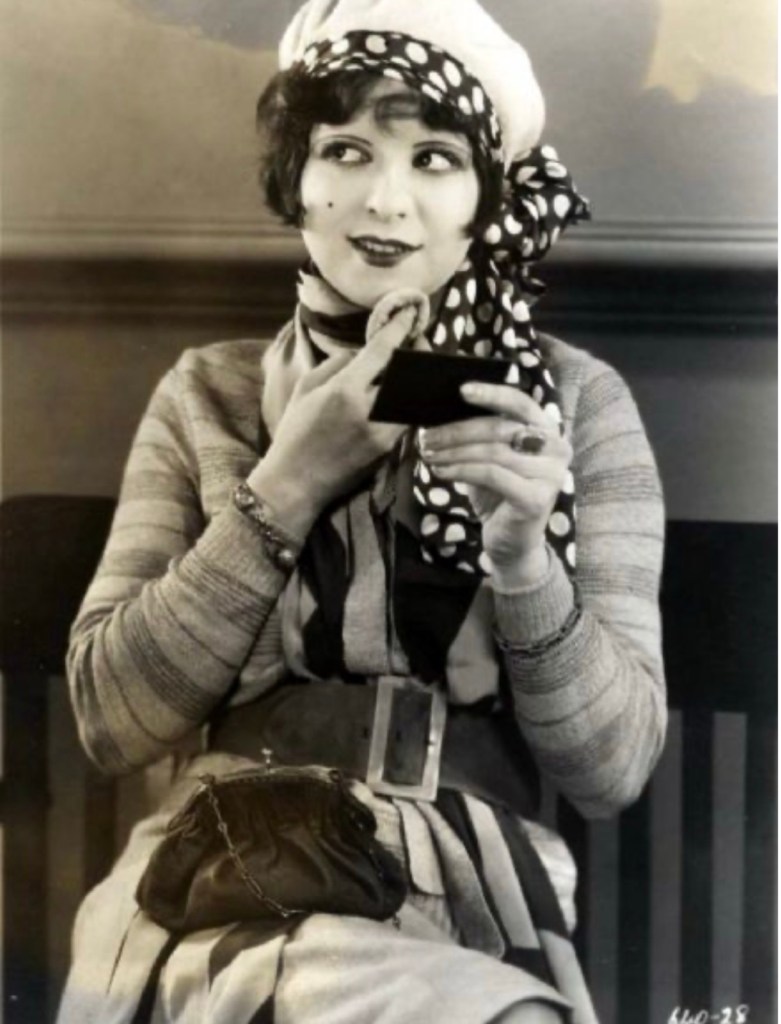
With the onset of the Great Depression, lasting a decade form 1929 to WW II, lipstick remained an affordable luxury, providing a touch of glamour in an economically bleak world.
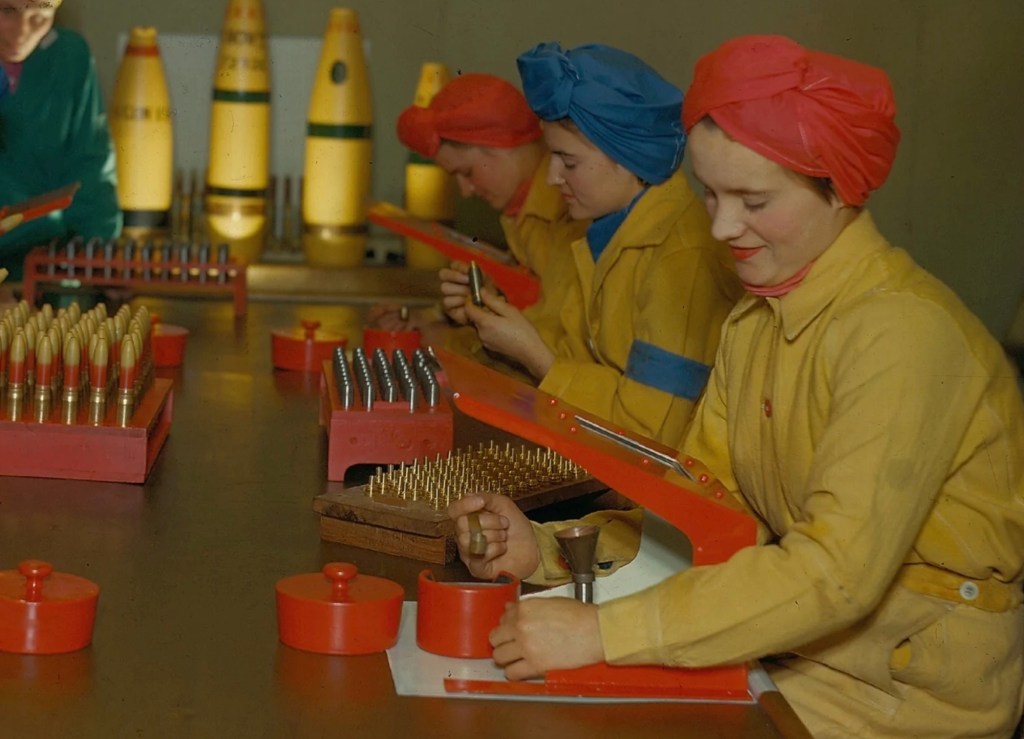
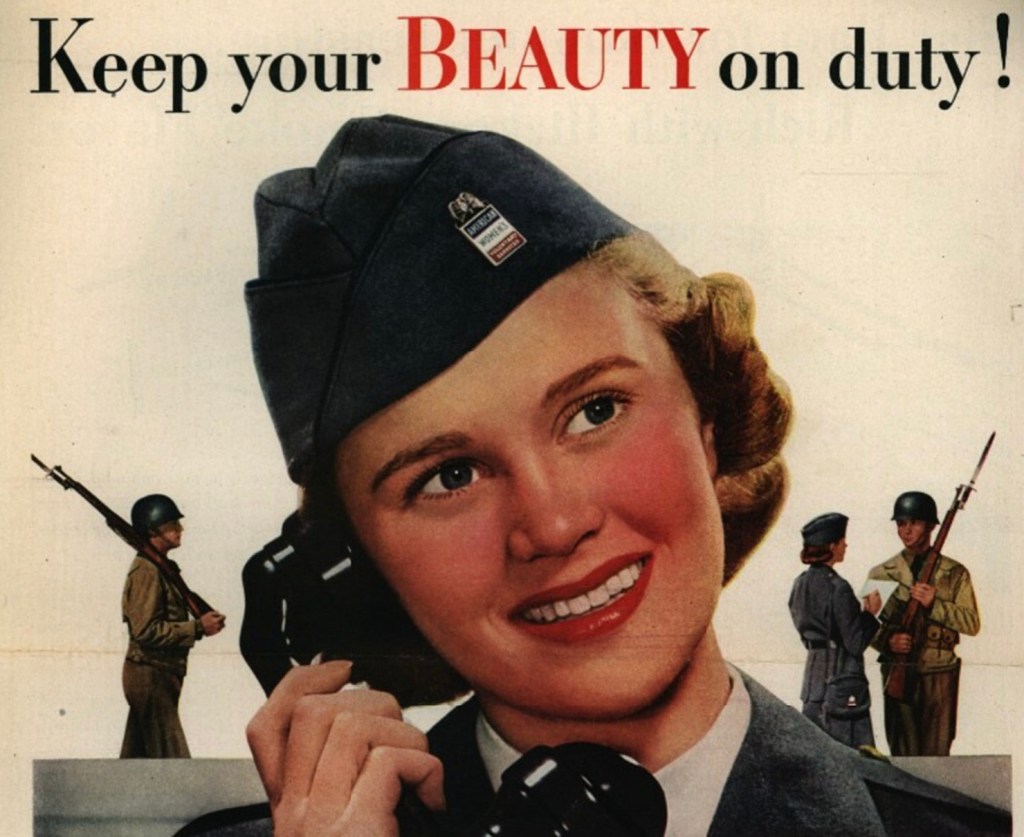
With WW II and women’s return to standing-in for men in ammunition factories, construction work and other non-traditional work, women were again encouraged to see ‘beauty as your duty’
Production of war supplies required protective glasses, overalls and scarf covered hair; red lipstick was a safe morale booster and sometimes distributed by war production outlets along with safety equipment.
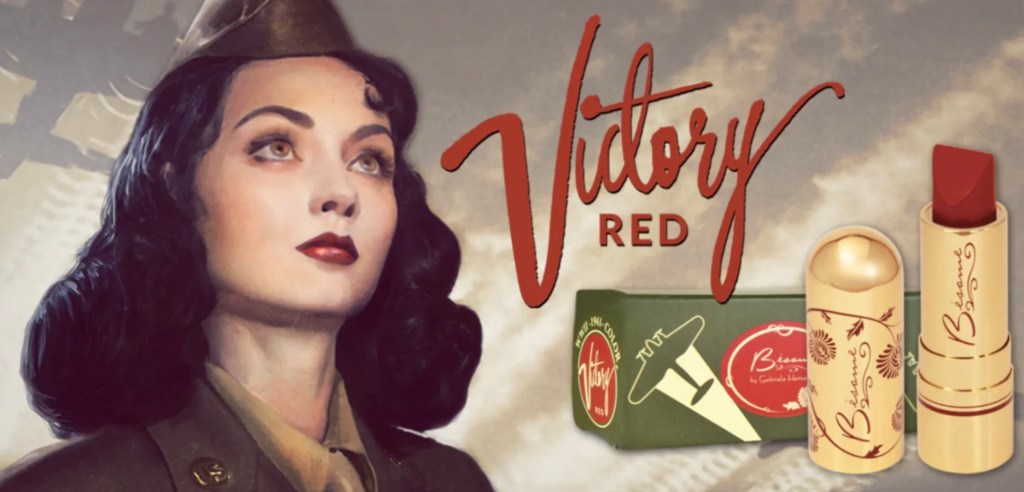
More importantly, however, red lipstick a took on a patriotic symbol for Adolf Hitler hated red lipstick and tried to ban cosmetics in Nazi Germany(4). His distain of lipstick came from the Nazi position that natural ‘Aryan’ beauty should be unadorned.
Winston Churchill,the wartime British Prime Minister, therefore encouraged the use of red lipstick. Strict rationing, significantly, did not apply to lipstick production because of its morale importance.
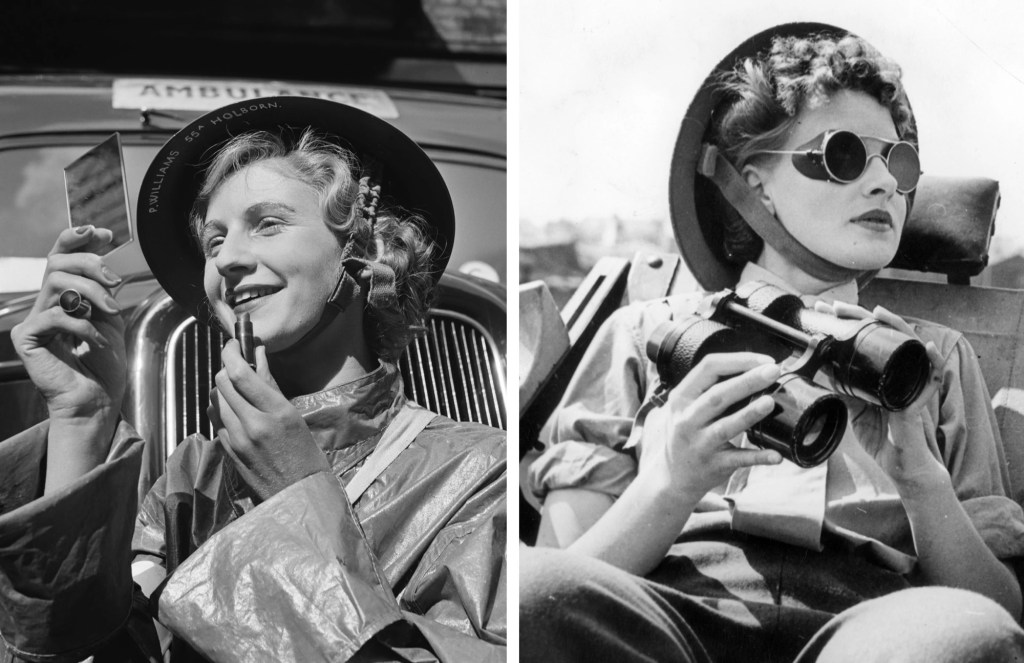
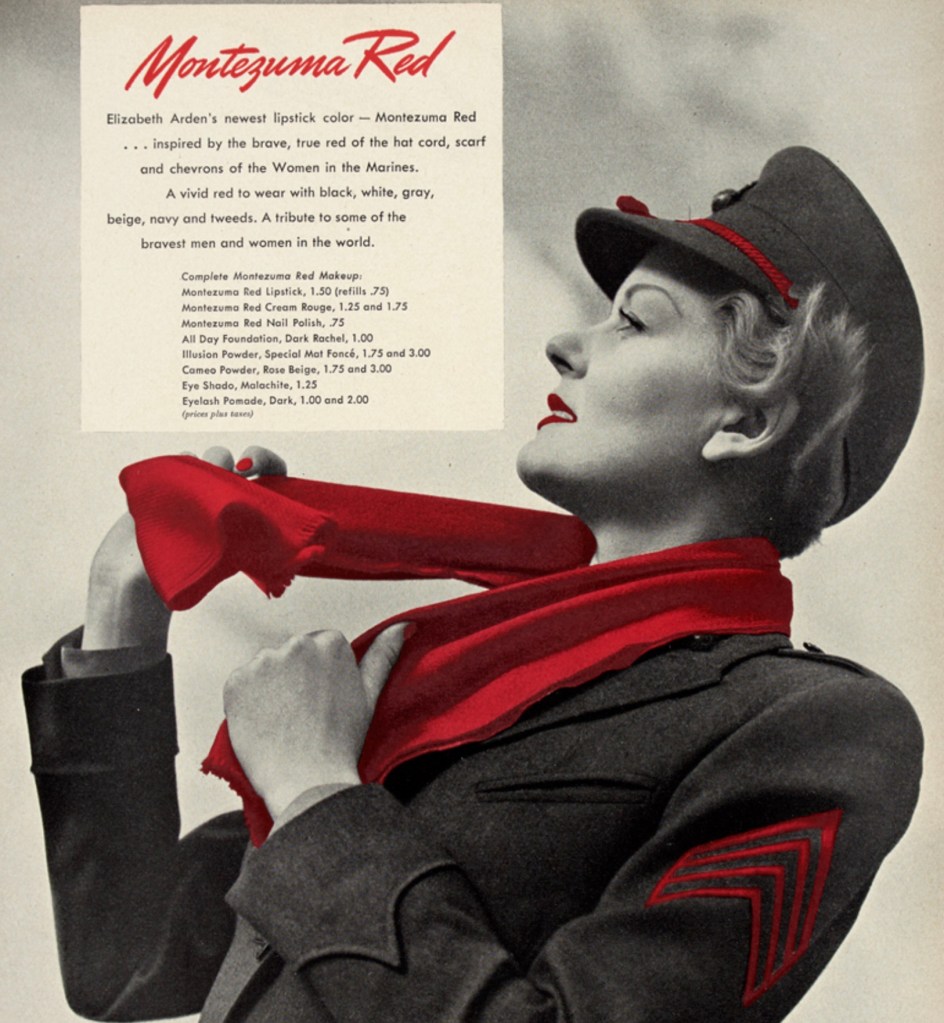
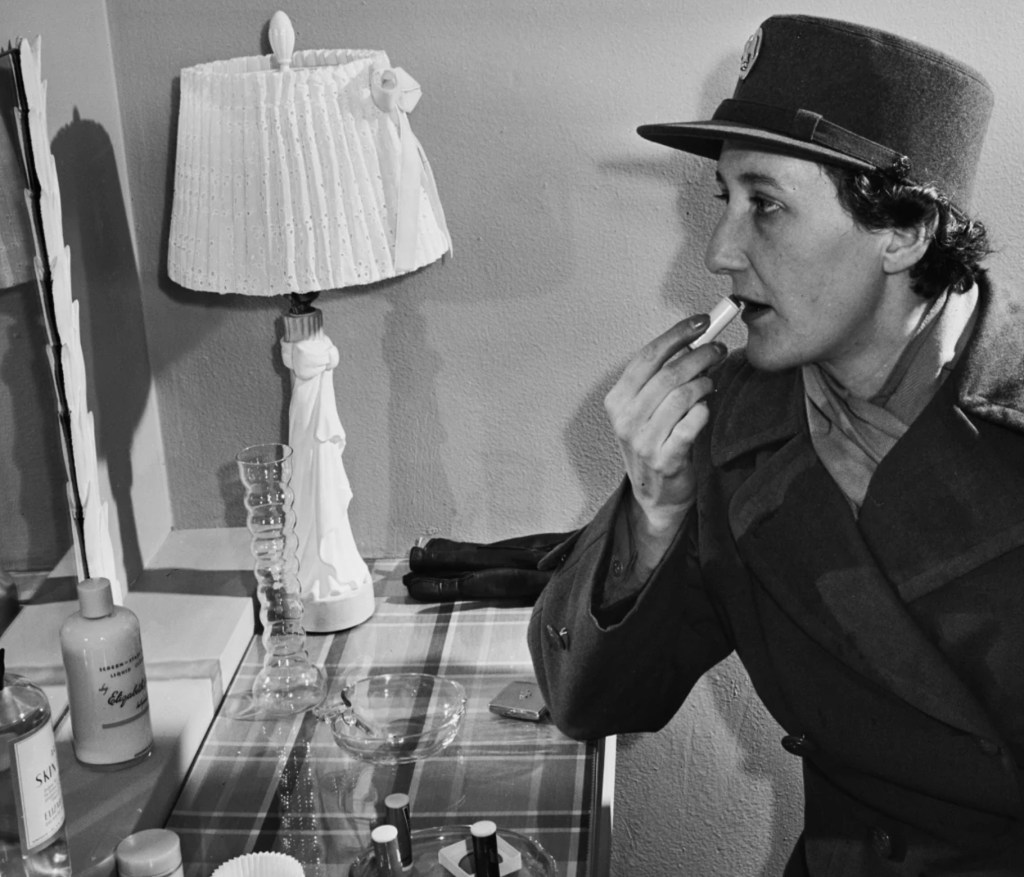
‘Lipstick is your weapon!’ became a slogan for American female military personnel. Elizabeth Arden was commissioned by the American Army, to create a red lipstick (along with cream rouge and nail polish) to match piping and chevrons of the woman’s uniforms.
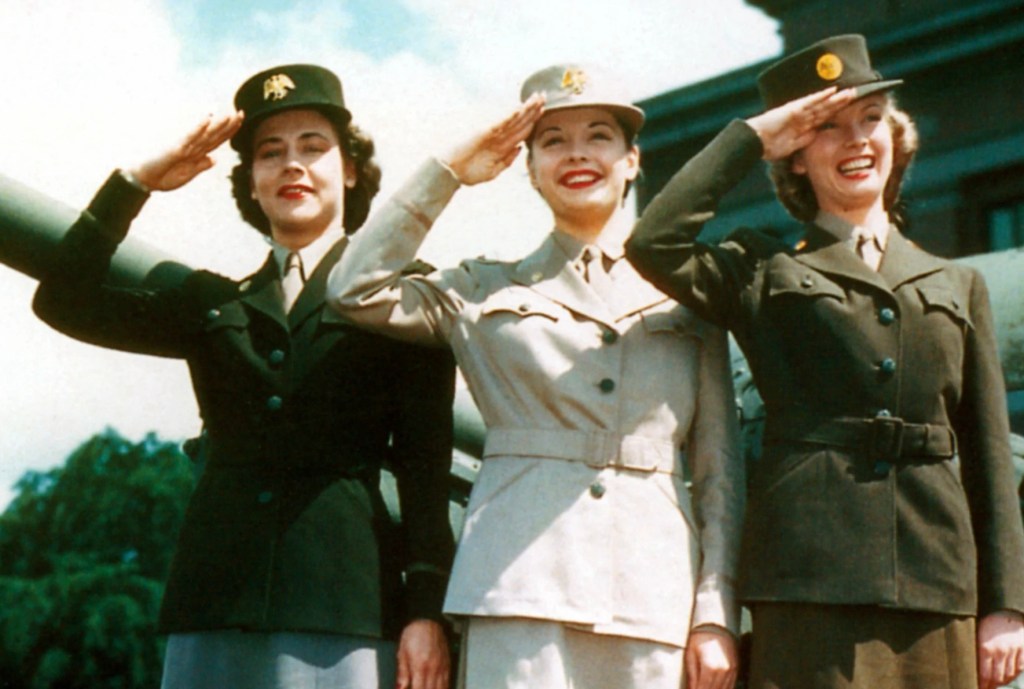
‘Montezuma Red’ lipstick was distributed to military women in their official kit. Arden also created ‘Victory Red’ for patriotic civilian women.
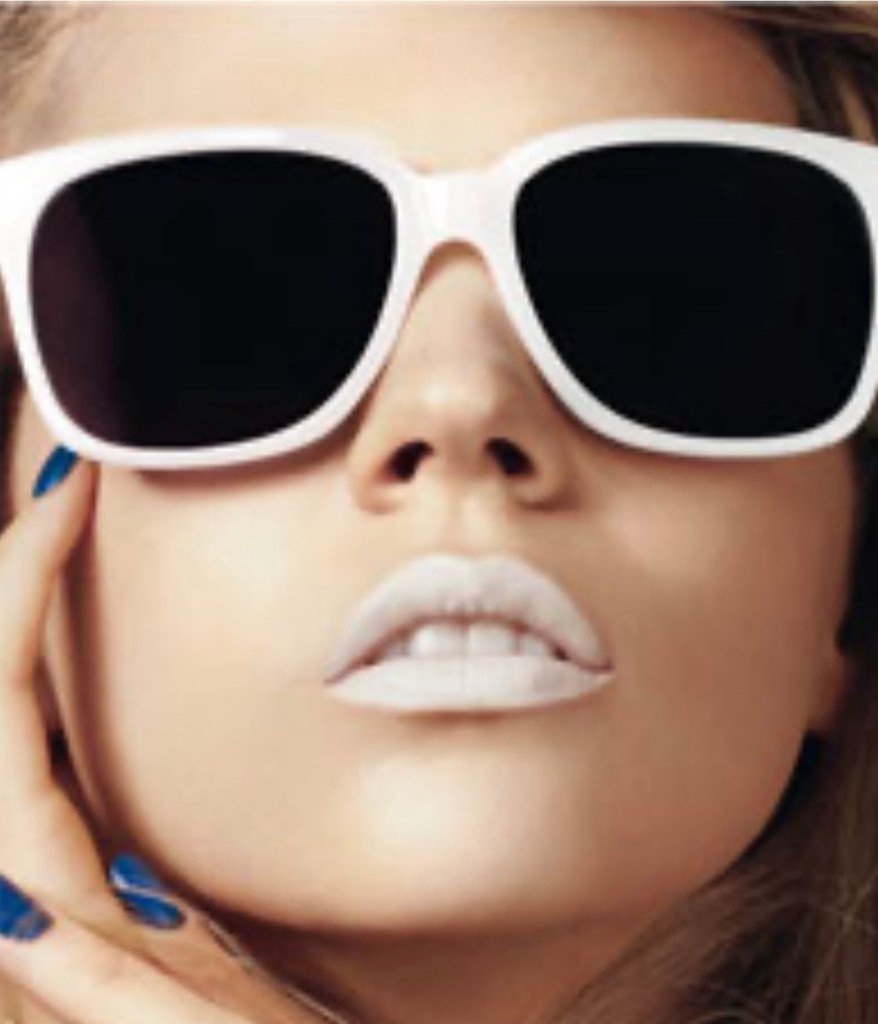
In the post-war decades, red lipstick was relegated to the fashion world. Other colours were embraced, such as white.
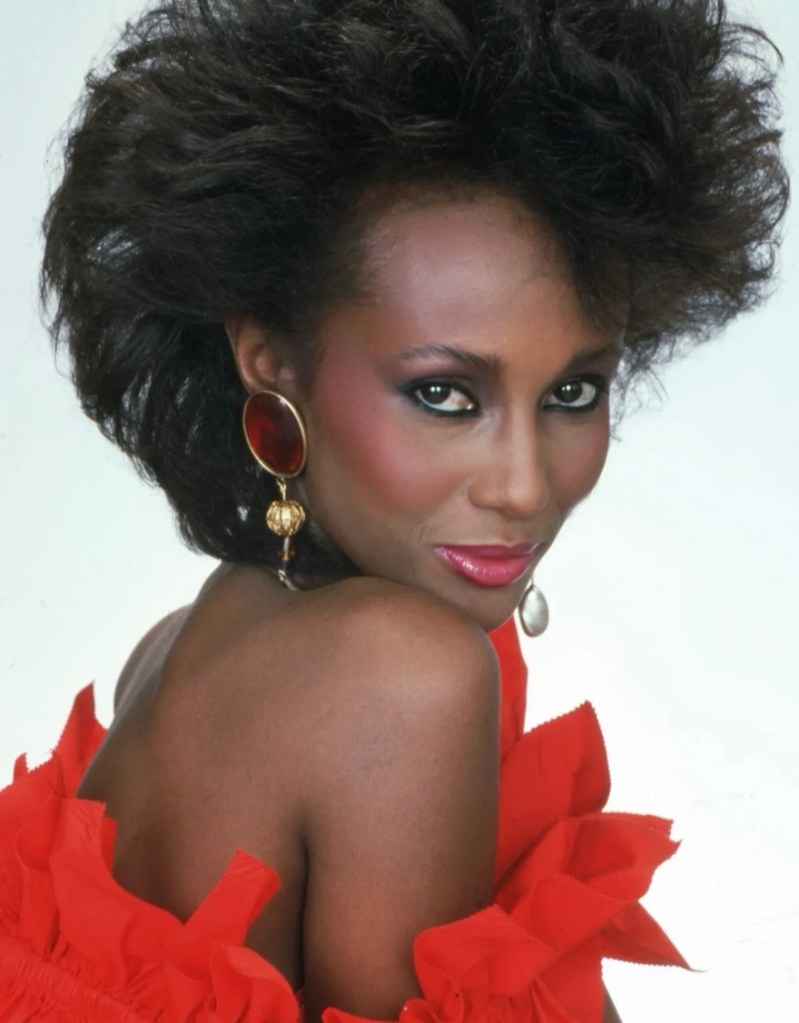
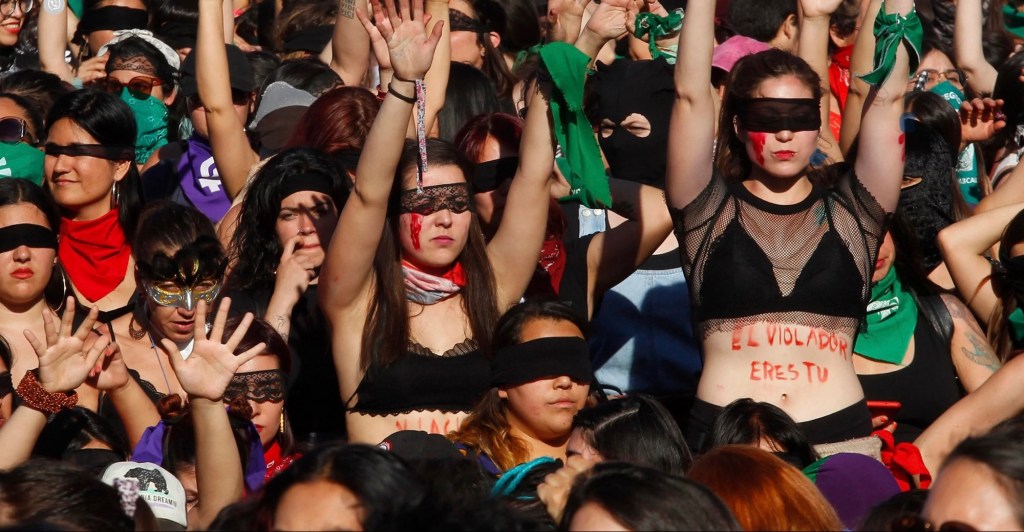
The 1990’s saw an emergence of ‘Lipstick Feminism’, a movement of ‘third wave’ feminism resulting in a protest boycott of items considered to be feminine (5). Red lipstick reappeared as a symbol of protest against sexual violence.
The Lipstick Index (6)(7) emerged as an economic indicator, first observable during the Great Depression. This index posits that lipstick sales rise during periods of economic recession. This is because, as consumers cut back on big ticket purchases in times of uncertainty, they still seek small indulgences. Purchasing a lipstick can provide a psychological boost in tough times. This ‘Lipstick Effect’ occurs across generational and income brackets and is believed to be driven by a desire to maintain appearance of social status during uncertainty.
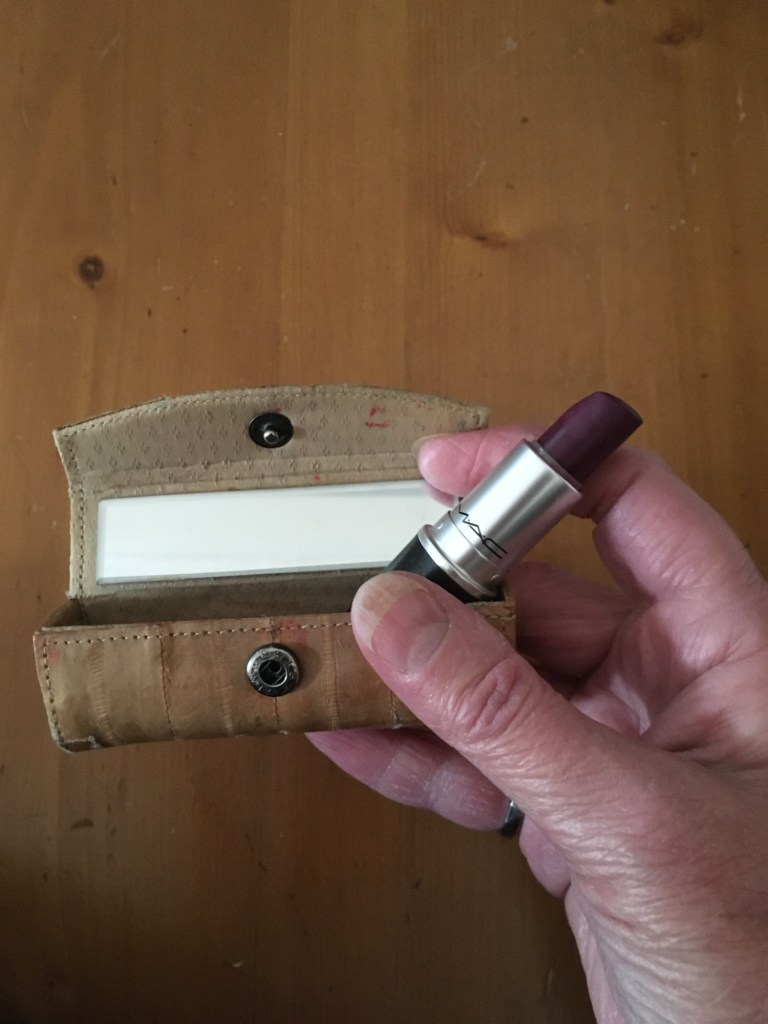
My red lipstick is ready for active duty, safely stored in my grandmother’s eel skin 1940’s holster, within my purse.
Morale booster, weapon, patriotic duty, optimism, civil disobedience or my economic indicator, I never leave home without it.
References:
(1) Elizabeth Arden and the Suffragettes, March 27, 2024, makeupmuseum.org
(2) Red Lipstick, a Symbolism of Women’s Struggle for Their Rights and a Weapon over Nazism, Serhill Pyvovarov, Yevgen Spiren, June 19, 2022
(3) 1920’s Makeup and the Cosmetic Industry, Karen’s blog, wardrobeshop.com
(4) Behind the Color; 1941 Victory Red, besamecosmetics.com
(5) Lipstick Feminism, Neoliberralism and the Undoing of Feminism, Arianna Marchetti, April 12, 2022, youngfeminism.eu
(6) The Lipstick Effect Powers Beauty Sales Despite Economic Uncertainty, Shelley E. Koran, July 11,2024, Forbes
(7)Lipstick Effect, Definition Theory, Value as Economic Inidicator, Adam Hayes, July 31, 2024, Investopedia
 Catherine Grove